Tactical Nutrition: Fuelling Performance, Resilience, and Recovery in Military & First Responders
High-performance jobs demand high-performance fuel. Generalised nutrition advice does not meet the unique needs for military personnel and first responders who work in high stress and often unpredictable environments.
Recent research in ‘Tactical Nutrition’ highlights the importance of how we fuel before and during shifts enhances not only physical capacity but also cognitive performance and resilience under stress.
What Is Tactical Nutrition?
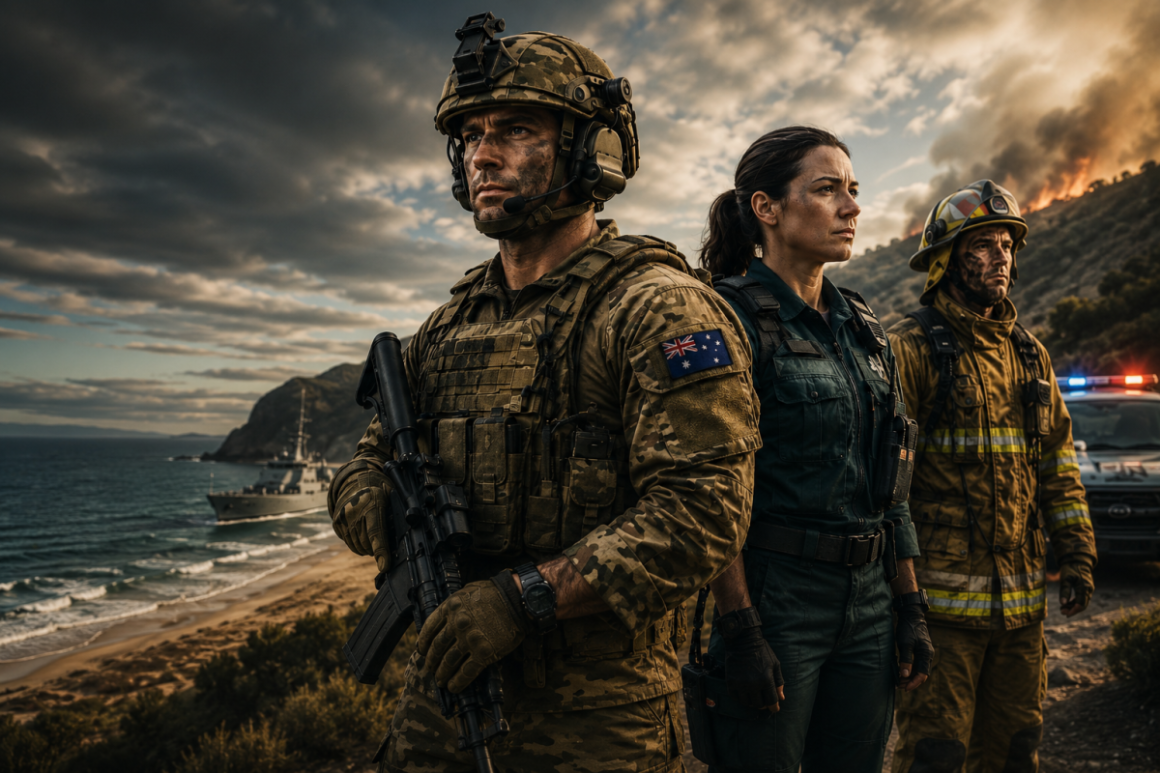
Tactical nutrition focuses on supporting the unique physical and mental demands of “tactical athletes”—soldiers, firefighters, police officers, paramedics, and others in high-stress operational professions. Unlike traditional sports nutrition, it’s not about aesthetics or competition, it’s about readiness and reliability under pressure environments.
According to the International Society of Sports Nutrition (ISSN), tactical nutrition’s core goal is to provide evidence-based strategies that optimise health, performance, and decision-making in work environments defined by irregular schedules, heat exposure, sleep deprivation, and limited food access.
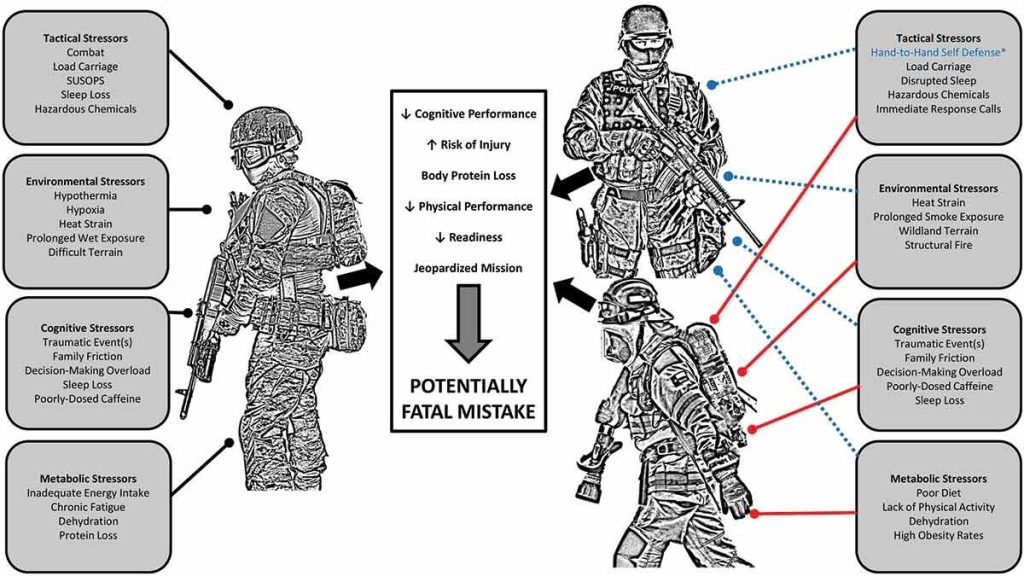
Image: International society of sports nutrition position stand: tactical athlete nutrition 2022 https://doi.org/10.1080/15502783.2022.2086017
The Science: What the Latest Research Shows
Shift Work Nutrition: A Metabolic Balancing Act
Tactical professionals often work extended or rotating shifts that disrupt circadian rhythms and meal timing. This can impair glucose metabolism, increase inflammation, and reduce alertness. A 2024 study in the Journal of Exercise and Nutrition found that while most first responders value healthy eating, barriers such as fatigue, time constraints, and irregular schedules lead to suboptimal dietary habits.
Key takeaway: Even small nutritional improvements—like structured meal timing and strategic hydration—can stabilise energy and improve decision-making during long or night shifts.
Macronutrient Priorities for Tactical Performance
- Protein: Fundamental for strength, recovery, and immune support. The ISSN recommends approximately 1.6–2.2 g/kg of body weight daily for tactical athletes under heavy training or deployment conditions.
- Carbohydrates: Still the primary fuel source for endurance, cognitive clarity, and quick response. Prioritise slow-digesting carbohydrates (e.g., oats, quinoa, root vegetables) to sustain energy through long shifts.
- Fats: Healthy fats such as omega-3s support brain function, hormonal balance, and inflammation control—critical during extended operational stress.
Together, these macronutrients create metabolic flexibility, helping tactical athletes adapt to fluctuating energy demands.
Hydration and Electrolytes
Even mild dehydration reduces physical output and cognitive reaction time. For those working in high-heat or high-gear environments (firefighting, field deployments), hydration strategies should include steady intake of fluids with balanced sodium, potassium, and magnesium throughout the shift. Simple habits—like drinking water at the start of every duty period, maintaining a refillable bottle and consuming electrolytes after intense sweat loss—can significantly reduce fatigue.
Evidence-Based Strategies for Tactical Readiness
- Start Strong: Begin your shift with a high-protein, balanced meal (e.g., eggs, Greek yogurt, oats)—it sets a steady energy tone.
- Pack a “Go-Bag”: Keep shelf-stable options like quality protein bars, tuna pouches, jerky, trail mix, dried fruit and nuts to prevent reliance on processed or sugary foods when duty calls.
- Plan Two Meals Ahead: Pre-decision reduces impulse eating. Know what you’ll eat before fatigue sets in.
- Optimise Caffeine Use: Caffeine boosts alertness but timing matters. Too late and it can disrupt sleep cycles. Use it early or mid-shift and avoid energy drinks late in the rotation.
- Post-Shift Recovery: Protein plus complex carbs aid muscle repair and sleep quality—think salmon with quinoa or a protein shake with a banana.
A Note on Supplements
A systematic review examined supplements used by active-duty military personnel. These supplements showed modest improvements in training adaptations, physical performance, recovery, and inflammation markers.
Evidence-supported supplements
- Creatine
- Beta-alanine
- Protein supplementation
- Carbohydrate supplementation
- Beetroot juice
Nutrition as a Readiness Tool
Fueling for tactical performance isn’t about perfection, consistency is key. Even small changes in nutrition and hydration improve endurance, focus, and reaction time which is key to safety and operational success.
As the ISSN concludes, tactical athletes who align nutrition with workload demands experience measurable improvements in performance, resilience, and long-term health. Proper nutrition makes the difference between surviving a shift and thriving through it.
This article provides a brief overview of the key concepts covered in Jodi’s Tactical Nutrition presentations, which have been delivered to both Victorian and Queensland Police units.
Ready to Join Forces?
If you would like a presentation for your unit or organisation
please reach out:
Further Reading & References
Gonzalez, D. E., McAllister, M. J., Waldman, H. S., et al. (2022). International Society of Sports Nutrition Position Stand: Tactical Athlete Nutrition. Journal of the International Society of Sports Nutrition, 19(1), 267–315.
View Article
Harlow, J., Blodgett, K., Stedman, J., & Pojednic, R. (2024). Dietary Supplementation on Physical Performance and Recovery in Active-Duty Military Personnel: A Systematic Review of Randomized and Quasi-Experimental Controlled Trials. Nutrients, 16(16), 2746.
View Article
Tryon, E. G., Barringer, N. D., Lieberman, H. R., & Conkright, W. R. (2024). Energy Deficit and Factors Associated with Energy Balance during a Combat Deployment in U.S. Army Special Operation Forces Soldiers. Nutrients, 16(18), 3072.
View Article
Erez, D., Lieberman, H. R., Baum, I., Ketko, I., & Moran, D. S. (2024). Ad Libitum Caffeine Consumption, Cognitive Performance, and Sleep in Special Forces Soldiers During a 96-Hour Combat Exercise. Frontiers in Neuroscience, 18, 1419181.
View Article
Cialdella-Kam, L., Bloedon, T. K., & Stone, M. S. (2023). Body Composition as a Marker of Performance and Health in Military Personnel. Frontiers in Sports and Active Living, 5, 1223254.
View Article
Marvin, G., Schram, B., Orr, R., & Canetti, E. F. D. (2023). Occupation-Induced Fatigue and Impacts on Emergency First Responders: A Systematic Review. International Journal of Environmental Research and Public Health, 20(22), 7055.
View Article
Kalkanis, A., Demolder, S., Papadopoulos, D., Testelmans, D., & Buyse, B. (2023). Recovery from shift work. Front. Neurol. 14:1270043. doi: 10.3389/fneur.2023.1270043
View Article